
Play-calling wristbands for football: the coach's guide
What changed in the rules, how the technology works, and what actually matters when you pick a system.
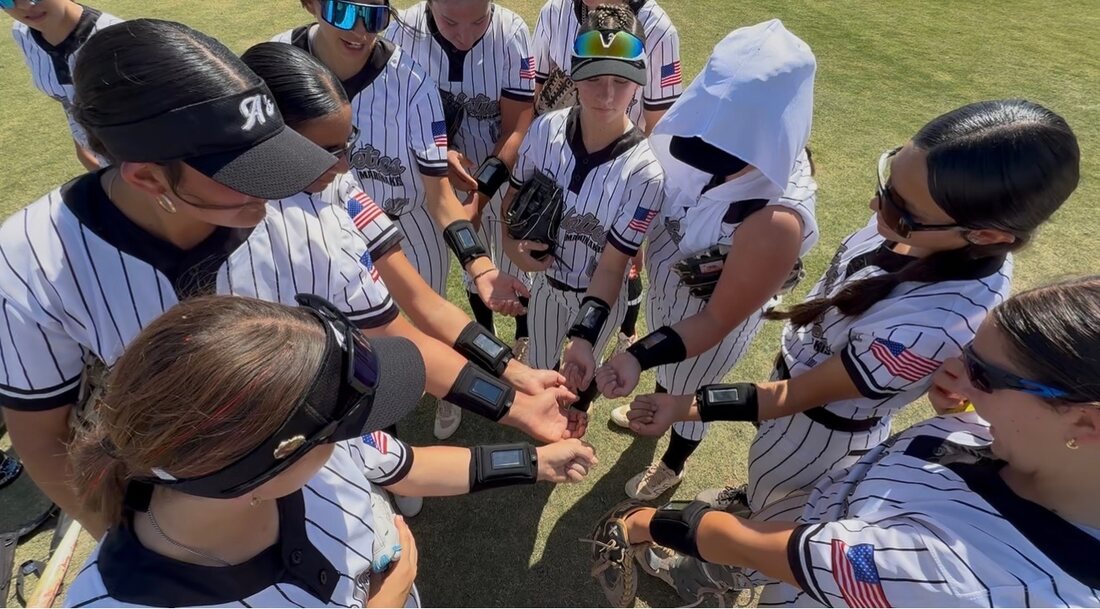
For decades, getting a play from the sideline to eleven helmets meant some combination of hand signals, poster boards, shuttling personnel, and the classic paper wrist coach. All of it costs seconds, all of it can be stolen, and all of it breaks down in a two-minute drill.
That era is ending. Rule makers have started approving one-way electronic communication at the high school level, and the wristband — the same place coaches have been strapping laminated play sheets since the 90s — is where the technology landed.
The rule change that opened the door in Texas
In April 2025, the University Interscholastic League approved one-way wearable communication for Texas high school football, effective for the 2025 season. The shape of the rule matters:
- One-way only. Coach to player. Players can't transmit back.
- Text, not audio. This is not an NFL-style helmet radio — the call arrives as a readable message on an approved wearable (wristband, watch, or belt pack).
- From the booth. Transmissions come from the coaching booth or press box.
- Unlimited players. Unlike the NFL's one-green-dot model, the booth can reach every equipped player on the field.
The UIL's stated motivation was straightforward: speed the game up and shut down sign stealing. If your program plays in another state, check your own association's current rule — several states are moving in the same direction, and manufacturers track compliance closely.
Paper wrist coach vs. electronic system
| Paper wrist coach | Electronic wristband system | |
|---|---|---|
| Getting the call in | Signal or verbal code, then every player decodes a numbered card | Call lands on every wristband at once, readable directly |
| Sign stealing risk | Real — signals and number codes can be charted over a game | Encrypted transmission; nothing visible to steal |
| Speed | Seconds per play, worse under pressure | Near-instant, same speed in the two-minute drill |
| Mid-game changes | Reprint and re-sleeve cards | Update from the call station |
| Failure modes | Lost cards, wrong sleeve, misread codes | Hardware/battery — pick a system built for weather and hits |
What to look for in a system
1. Independence from stadium infrastructure
Friday-night stadiums are radio-frequency war zones: thousands of phones, streaming cameras, headsets. A system that rides on Wi-Fi or cellular is a system that can die at kickoff. DigiWrist runs on its own encrypted wireless protocol — no cell service, no Bluetooth, no internet connection anywhere in the loop.
2. Range that covers your venue
Booth-to-field in a big stadium is farther than it looks. DigiWrist hardware holds reliable at 300+ yards, which covers any high school venue with margin.
3. Durability at game speed
Wristbands live on forearms that hit the ground forty times a night, in rain and in August heat. Look for purpose-built sports hardware — FCC-certified, sealed, and tested — not consumer smartwatches in a rubber case.
4. One-touch simplicity in the booth
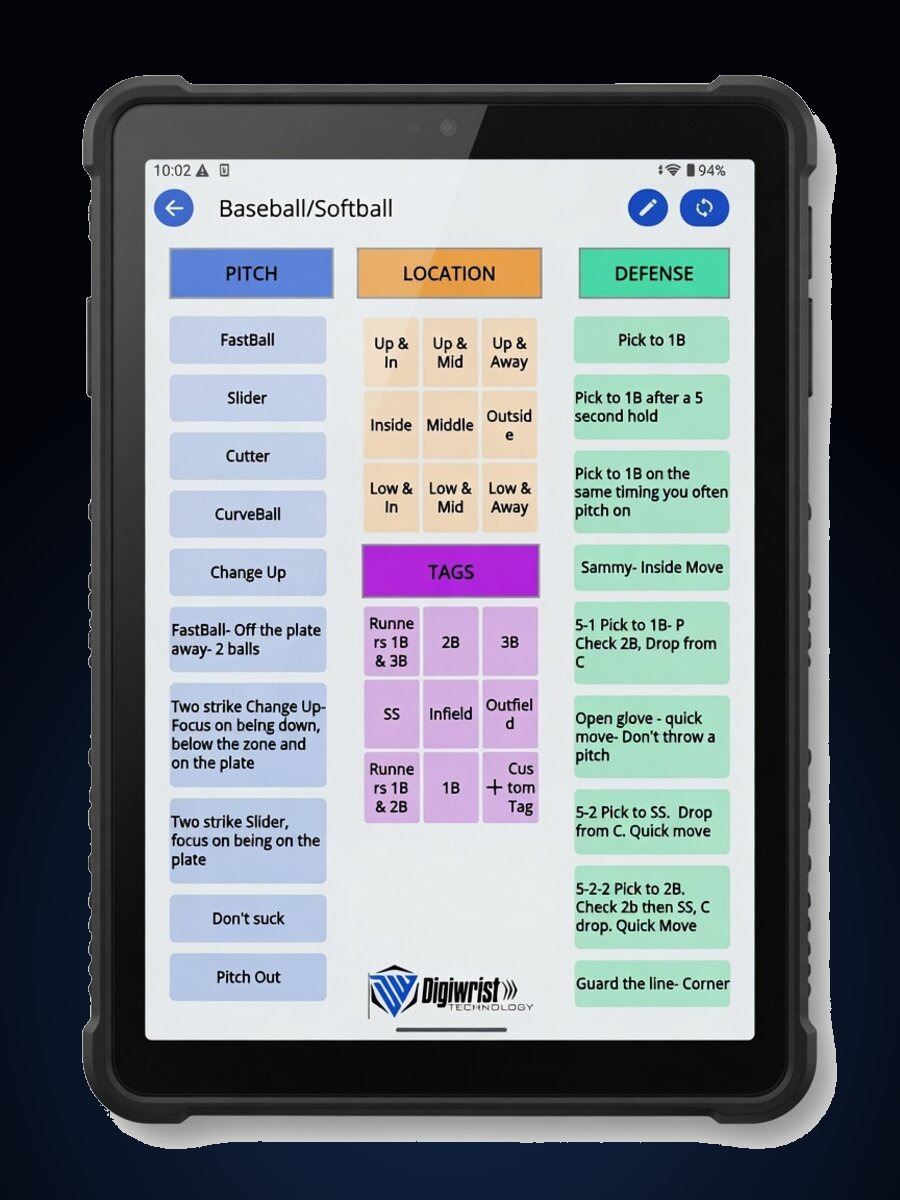
A play-calling system earns its keep in the chaos: 3rd-and-8, clock running, personnel package changing. Sending the call has to be one touch, not a phone app with a lock screen in the way.
5. Compliance you can show an official
Whatever you run, you should be able to explain in one sentence how it meets your association's rule. One-way, text-based, booth-originated systems are exactly the template the UIL wrote into its 2025 approval.
Frequently asked questions
Are electronic play-calling wristbands legal in high school football?
Does the system need Wi-Fi or cell coverage?
How many players can receive a call?
What happens if the other team runs the same system?
See it on your own wrist
DigiWrist will be demoing the full system live at the 2026 THSCA Coaching School in Houston, July 19–21. Or start at the main site and talk to us directly.